
Manufacturers and B2B exporters
Branding for manufacturers whose expertise buyers cannot see yet.
Many manufacturers are better than they look. The capability is on the factory floor; the website shows a list of products. We make that expertise visible to the buyers who search before they call.
In short
A manufacturer's brand is judged online first.
Sourcing teams, procurement managers and brand owners now shortlist suppliers before they speak to one. They search by product, by process and by industry, and they judge capability from what they find. A manufacturer with deep expertise and a thin website loses that comparison without knowing it happened.
Pixnut works on the part of the brand buyers meet before the first call: the positioning, the identity where it needs to change, and above all the website and its content, organised around how buyers actually look.
What buyers look for
Four things a buyer checks before the first call.
Their own words
Buyers search by garment, application, material or finish, not by your internal product codes. A site organised in their terms is found; one organised in yours is skipped.
Specifics, not adjectives
What you make, for which industries, with which processes. A page for each, with the detail that separates a specialist from a generalist.
Answers to technical questions
Guides that answer what sourcing teams ask before they request a sample, written by people who know the process and checked by you.
A clear way in
A route to the right person for each division or product family, so an enquiry arrives with the context a salesperson needs.
For exporters
Buyers abroad cannot visit the factory first.
A buyer in another country meets you on a screen long before they see a sample. They judge the range, the standards and the seriousness of the business from what the website shows and how clearly it says it. For an exporter the website is the first factory visit, and it is open to every buyer at once.
That is why we start with structure: every subject a buyer might search for gets a page of its own, in plain language, with the metadata and structured data that let search engines and AI assistants read it correctly.
Who it is for
Established makers, and the teams that sell for them.
Specialist manufacturers
Businesses with real process expertise, finishes or materials that competitors cannot match, and a website that does not say so.
B2B exporters
Companies selling to buyers in other countries, who need to be found and understood without a sales visit.
Family businesses moving up
A second generation widening the range, the markets or the customers, with a brand still built for the first.
Contract and private-label producers
Makers whose customers' brands are famous and whose own is invisible, even to the buyers they want next.
Signs it is time
When the brand is the bottleneck.
- Buyers ask on the phone what your website should have told them
- Your product pages list codes, not what each one is for
- New services, finishes or markets do not appear online at all
- Search finds your competitors for the processes you are best at
- The sales team sends PDFs because the website cannot be shared
- Your brand still describes the business you were ten years ago
How it runs
From the factory floor to the search result.
Understand the buyer
We learn how your buyers search and decide: the industries they come from, the products they compare, the questions they ask before a sample.
Map the expertise
Products, processes, materials, finishes and industries, organised into a structure buyers can navigate in their own terms.
Position and plan
What the business should be known for, and a page plan that gives each subject a page of its own, built to be found.
Design and build
The website in your brand's system, written in plain language, with metadata, structured data and sitemaps on every page.
Hand over
A site your team can keep adding to, with the structure in place for new products, finishes and markets.
What you receive
Scoped to what needs to change.
| Deliverable | What it is for |
|---|---|
| Buyer and content audit | What buyers look for, what exists today, and the gaps between the two. |
| Information architecture | A sitemap organised by industry, product and process, the way buyers search. |
| Positioning and messaging | One clear statement of what the business does best, with the proof behind it. |
| Identity refresh, where needed | An evolution of the existing identity, keeping what buyers already recognise. |
| Website design and build | Every page designed for desktop, tablet and phone, then built and launched. |
| Search foundations | Metadata, structured data, sitemaps and a crawler policy, so search engines and AI assistants can read the site. |
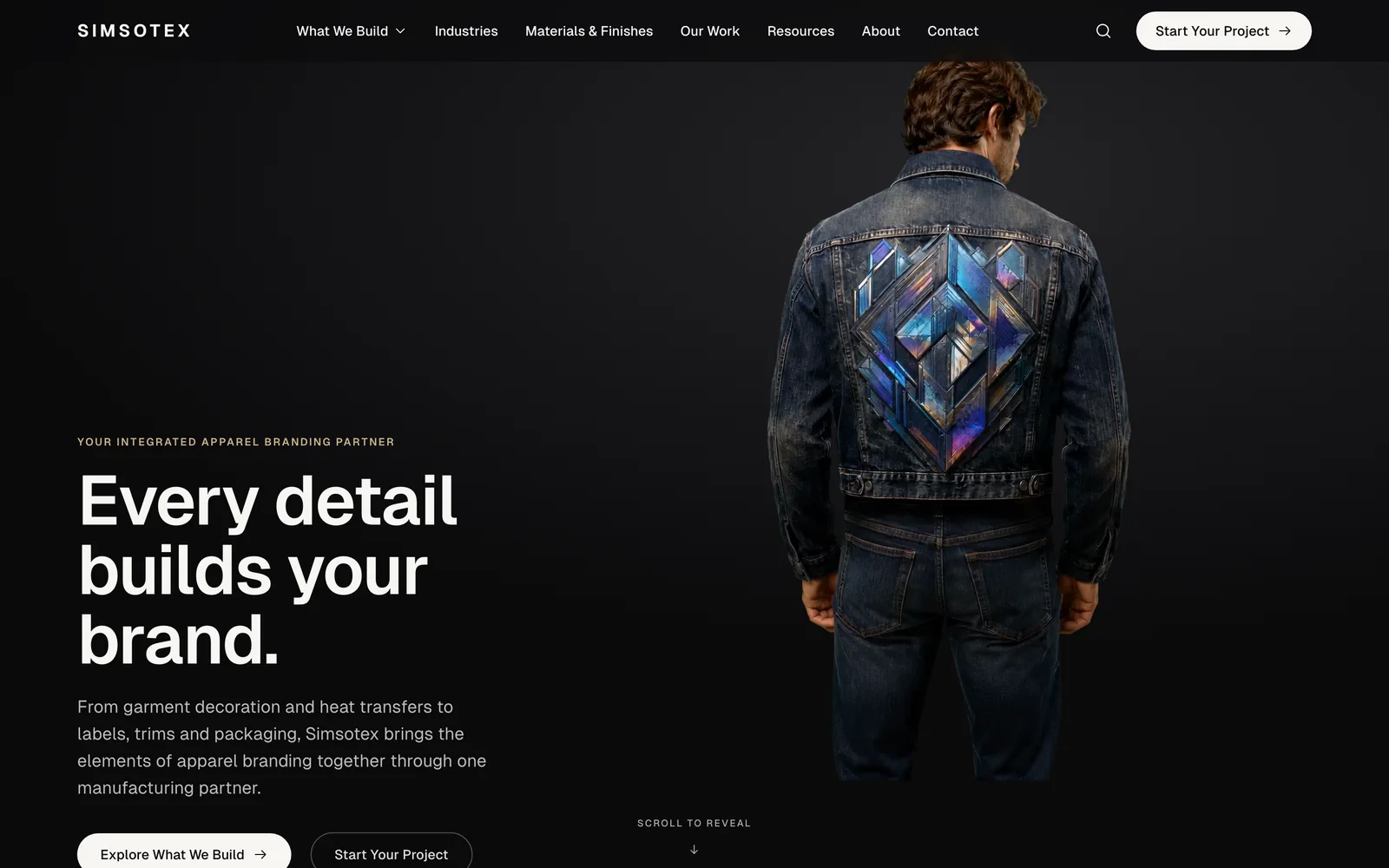
- An established apparel-branding manufacturer: screen printing, heat transfer and related garment finishes
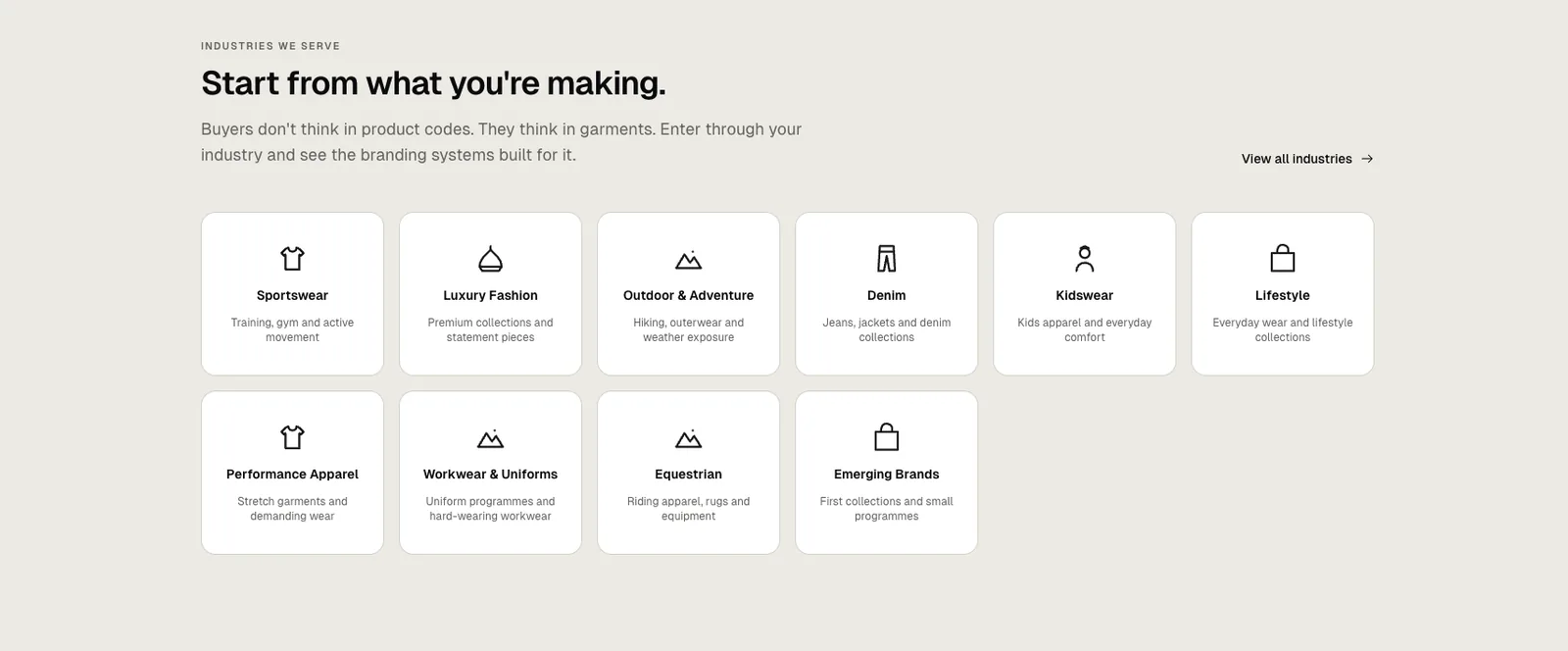
- Pixnut planned the information architecture and organised products, finishes and industries the way buyers search
- 108 indexable pages: 11 industry, 13 product, 10 materials and finishes, 15 work, and a 46-page resources library
- All 108 pages indexed at handover, per the project completion report (October 2026)
- The company and its corporate identity predate Pixnut's work, which was the website, its content structure and its search foundations
Questions
What manufacturers ask.
Do manufacturers need branding, or just a better website?
Will we have to change our logo?
How do you learn a technical business quickly?
Can the website help buyers abroad find us?
What did Pixnut do for Simsotex?
Can you work with a manufacturer outside India?
Does your website show what you can make?
Tell us what the business makes, who buys it and where. We will tell you honestly what would change.